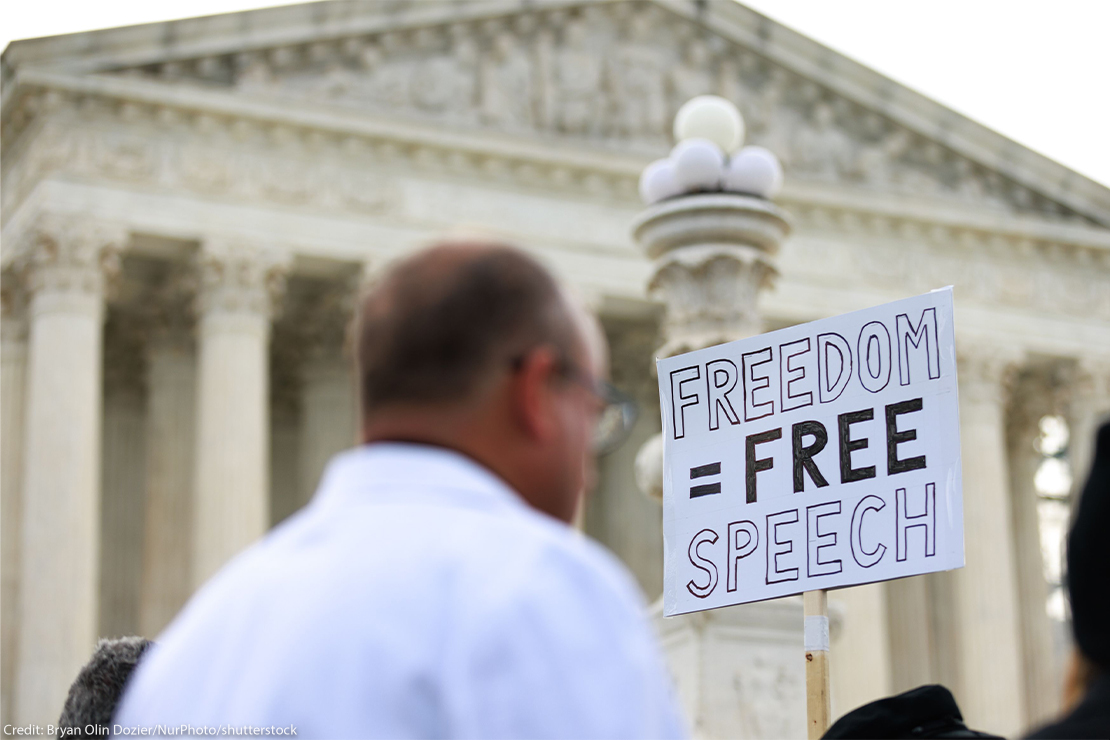
© 2025 Palestine Center for Public Policy
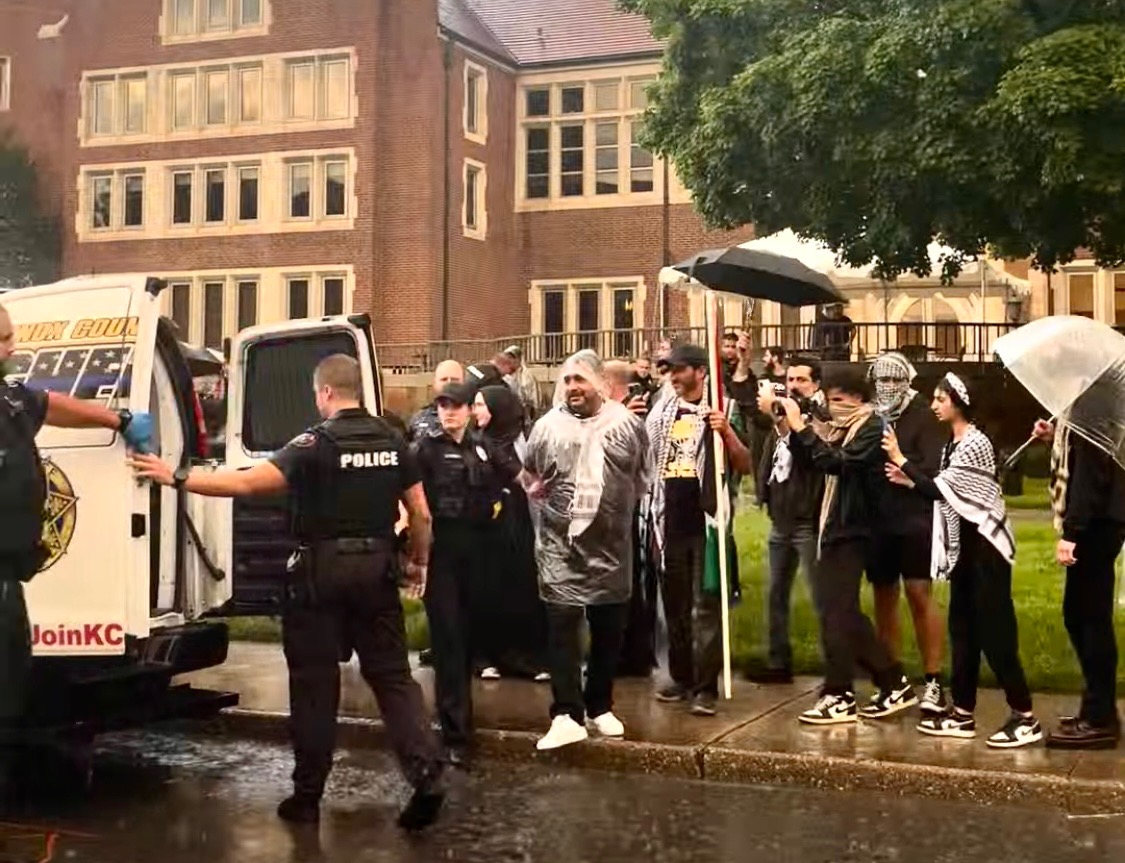

Although it has been over a year since many university students ended their pro-Palestine encampments, many protesters are still facing felony-level criminal charges, even as others have had charges dropped. An overview of charges filed from over 3,200 arrests at 35+ universities across the country reveals a pattern of uneven and biased prosecution. In particular, of the 4 universities where protesters are facing severe felony charges, 3 involve a substantial number of non-university affiliated protesters. This reveals an intentional targeting by prosecutors across multiple jurisdictions of so-called “outside agitators”—a term used to delegitimize community protest participation—while in many cases students from elite universities have had their charges dismissed.
The encampment movement began at Columbia University in April 2024 and spread rapidly to more than 109 higher education institutions around the country. Over 3,200 arrests were made in the spring of 2024 in response to pro-Palestine student encampments in over 19 states and the District of Columbia. In response, protesters demanding their university divest from the ongoing genocide in Gaza were met with brutal police violence, extreme harassment by Zionist counter-protesters, and prejudiced university disciplinary proceedings that targeted students of Arab, Muslim, and Palestinian background.
A year later, many of the charges initially filed by police have been dropped by the respective City or District Attorney. Many of these initial charges were filed by police at encampment sweeps, where hundreds of protesters were often arrested en masse, primarily for trespassing. However, while some of these charges may have been dismissed for lack of evidence, at the same time other protesters continue to face charges up to the felony level. Many of these harsher charges are for violations other than trespassing, target a smaller group of individuals, and are disproportionately constituted of non-university affiliates from the greater community.
We reviewed data from over 72 university campuses across 24 states and Washington, D.C. using information from the Appeal, news clippings, information from prosecutors’ offices, public records, and social media. This produced four instances where groups of protesters face felony charges for actions taken at a university. The four ongoing felony-level cases are at the City University of New York, the University of Pittsburgh, Case Western Reserve University, and Stanford University.
Individuals at Case Western Reserve University in Cleveland, Ohio took part in an action in the early morning on November 8, 2024. District Attorney Michael O’Malley charged 11 people with felony breaking and entering, possession of criminal tools, and vandalism on February 19, 2025. Of the 11, 6 were Case students and 5 were not affiliated with the university.
According to the Cuyahoga County Clerk of Courts, 2 defendants have been referred to diversion, 8 are preparing for final pretrial conferences in August, and 1 is being sentenced in late August.
If convicted, a felony of the third degree in Ohio is punishable by a definite term of 9 to 36 months. A felony of the fifth degree is punishable by 6 to 12 months. Vandalism as a felony of the fifth degree is also punishable by an additional fine of up to $2,500.
The case has not received media attention since the indictment of the 11 in February 2025. The Case Western chapter of Students for Justice in Palestine (SJP) continues to publicize updates about the “CWRU 11” on their Instagram, @cwrusjp.
Over 170 protesters were initially arrested at the pro-Palestine encampment at the City College of New York on April 30, 2024. 28 protesters were later charged with third-degree felony burglary.
Of those, 7 were dropped on June 12th, 2024. Several of the remaining protesters took plea deals with the DA’s office, leaving 8 individuals who are continuing to challenge their charges and go to trial. None of the 8 are affiliated with the City University of New York.
Third-degree burglary in New York is a Class D felony, carrying up to 7 years in prison.
There has been significant coverage of this case in the media, including comparisons with the treatment of similar protesters at Columbia University. The case has been widely publicized by New York Mayor Eric Adams, who emphasizes that 60% of those arrested were not CUNY affiliates. Adams and Manhattan District Attorney Alvin Bragg likely intend to pursue the 8 as examples of “outside infiltration” of universities.
Ongoing updates about the 8, including calls to pack the court, are publicized on the CUNY for Palestine Instagram @cuny4palestine.
12 protestors and 1 student journalist were arrested on June 5, 2024 in a building occupation at the President’s Office of Stanford University. Santa Clara County District Attorney Jeff Rosen charged the 12 protesters with felony vandalism and conspiracy to commit a crime on April 10, 2025. All but one were Stanford students or alumni.
Vandalism with an estimated $10,000 of damage is punishable in California by up to 1 year of imprisonment and/or a fine of up to $50,000. Criminal conspiracy is punishable by imprisonment for not more than one year and/or by a fine not exceeding $10,000.
There has been significant media coverage of this case, including of the recent charging decision. Despite the defendants being nearly all affiliates, the severity of the charges suggests a shift in prosecutorial tactics even at elite institutions.
Updates about the case are publicized on Instagram by Stanford Against Apartheid in Palestine (SAAP) @sit_in_to_stop_genocide and Stanford Students for Justice in Palestine (SJP) @stanfordsjp.
24 individuals were arrested in connection to Palestine solidarity encampments at the University of Pittsburgh in Pennsylvania on April 23 and June 4, 2024. Of these, District Attorney Stephen Zappala filed charges against over a dozen individuals which include felony riot, felony aggravated assault, misdemeanor obstruction of law, and misdemeanor failure to disperse upon official order. According to the Pittsburgh chapter of Students for Justice in Palestine, 6 of the protestors facing charges are Pitt students or alumni.
According to online court records from the Unified Judicial System of Pennsylvania, 6 of the protestors initially charged with felonies have been referred to the Accelerated Rehabilitative Disposition (ARD) diversion program. Another defendant has had their felony charges dropped to misdemeanors. 3 defendants have taken guilty pleas to a lesser charge.
2 defendants are still facing felony charges for aggravated assault and riot and conspiracy and riot and have a jury trial scheduled for September 15, 2025.
In Pennsylvania, aggravated assault against designated individuals is a felony of the second degree and is punishable by a maximum of ten years of imprisonment. Riot is a felony of the third degree and is punishable by a maximum of seven years of imprisonment.
There has not been much media coverage of this case. Updates are posted on the Instagram pages of University of Pittsburgh Students for Justice in Palestine @sjp_pgh and Pitt Drop the Charges @pgh_dropthecharges.
These four cases of multiple encampment-related prosecutions are in addition to others around the country, primarily against individuals, who have also been charged or sentenced with felonies:
Other felony charges at the University of South Florida, the University of Michigan, the University of Wisconsin-Madison, and the University of Minnesota have been dropped or reduced to misdemeanors.
While the vast majority of encampment-related trespassing charges have been dismissed, prosecutors continue to target small groups of individuals for more intensive actions such as building occupations. It appears that prosecutors may be sending a message that, while it is enough to merely threaten university students for peacefully trespassing, the most extreme elements of the encampments were caused by a minority, including a significant number of outsiders, who should be prosecuted aggressively.
In addition to the selective choice of protesters to prosecute and the felony-level charging decisions, rhetoric from District Attorneys also contributes to the “outside agitator” myth. In New York, Manhattan District Attorney Alvin Bragg and Mayor Eric Adams have been vocal about the CUNY protesters’ non-affiliate status. While Bragg oversaw over 200 arrests made across student encampments at City College, Columbia University, the Fashion Institute of Technology, New York University, and the New School, he ultimately only pursued charges against arrestees at the City University of New York.
In a May 2024 press release, Eric Adams characterized the Columbia and CUNY protests as being infiltrated by outsiders. The press release alleges that 29% of the Columbia protesters and 60% of CCNY protesters were not affiliated with either university. Adams and NYPD Commissioner Caban go on to claim that students were “influenced by those who have no goal other than spreading hate and wreaking havoc on our city” and that “professional, external actors” were “working to escalate the situation.” Caban goes so far as to argue that “these once peaceful protests are being exploited by professional outsiders, and our young people are the ones most at risk.” At Case Western and Pittsburgh, the Cuyahoga County Prosecutor’s Office and University of Pittsburgh communications also pointed out the non-affiliation of encampment protestors.
Additional rhetoric from these DAs draw a firm line between “peaceful” protests, such as the encampments, and “violent” examples of vandalism and destruction. Adams and Caban write that they are in support of free speech and peaceful protest, but that “violence, property damage” or “calling for the destruction of an entire people” are not peaceful and thus merit criminal charges. Cuyahoga County District Attorney Michael O’Malley similarly claims that while “peaceful protests are a fundamental cornerstone of our democracy,” the Case Western protesters “cross over the line.”
Santa Clara County District Attorney Jeff Rosen—whose daughter works for AIPAC—has released numerous statements about his charging decision. His argument hinges on asserting the right to protest while arguing that Stanford protesters “intentionally crossed the clear and bright line between dissent and destruction.” Altogether, these prosecutors attempt to justify their charging decisions—among the most extreme in the nation—by distinguishing between “peaceful” students and a “violent” outside-influenced minority.
It has been additionally noted that the select prosecution of protestors mirrors class and racial disparities between public and private universities. The contrast between his treatment of student protesters at Columbia University and CUNY has been noted as an example of disparate treatment for universities with larger working-class and student of color populations.
Below is a table of select cases comparing outcomes of university misdemeanor criminal charges. The table includes all identified instances of ongoing misdemeanor prosecutions as well as the outcomes of some elite university cases. It is important to note that due to a lack of media coverage and insufficient information to search for public records, this may not be an exhaustive list of all current misdemeanor prosecutions. Nearly all identified ongoing misdemeanor prosecutions are at large public universities, while corresponding charges at elite private universities have almost all been dismissed.The amounts listed for public universities reflect the cost of in-state tuition.
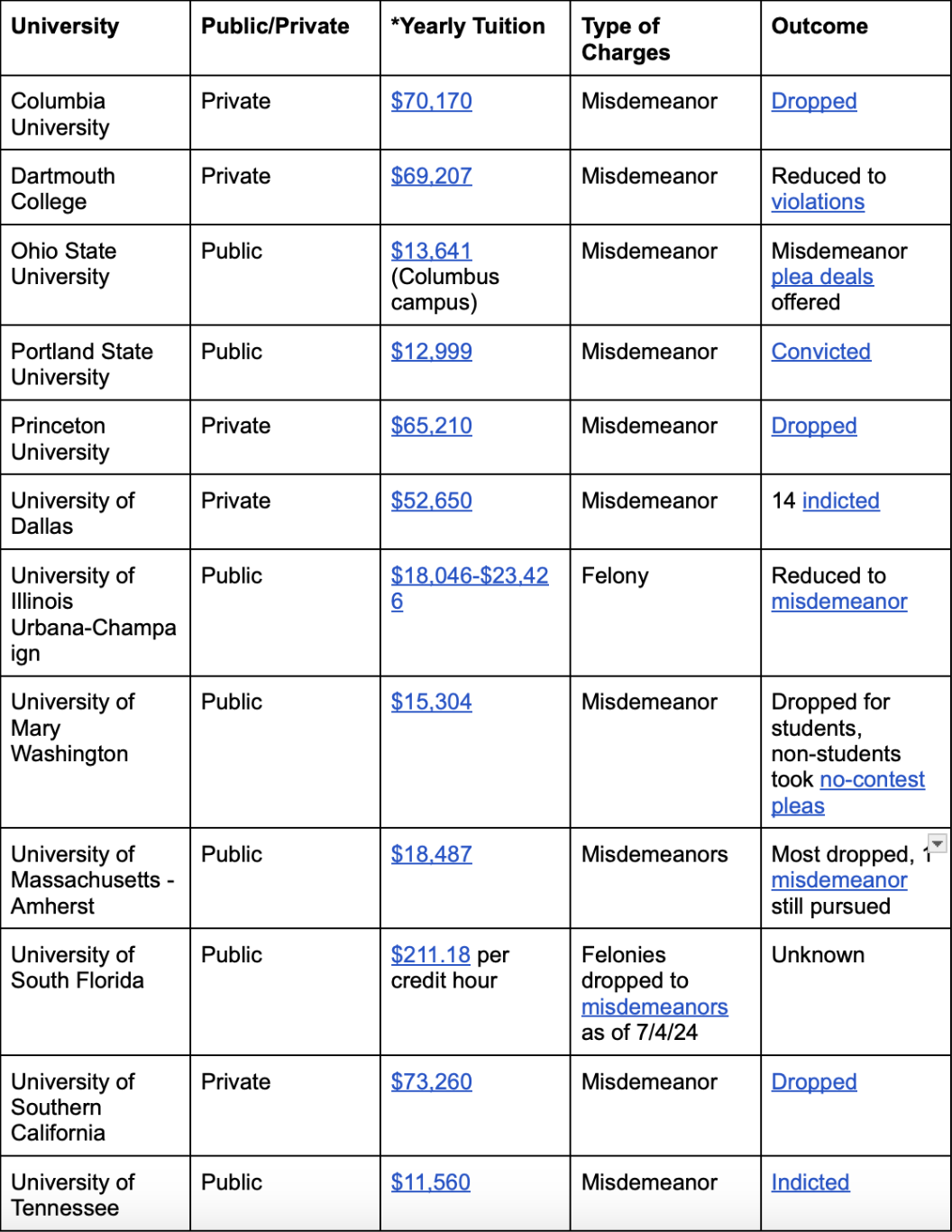
Encampment-related charges still carry significant consequences for many more than a year after their arrest. Many of the most severe ongoing cases involve non-university affiliates, were directed towards non-encampment actions such as building occupations, and aggressive charges. While students have been successful in litigating for violations of civil rights and freedom of expression at their universities, it is also important to support the ongoing criminal cases of non-affiliates who do not benefit from student speech rights.
Just as the Zionist state criminalizes political dissent in Palestine, the U.S. legal system is targeting non-university affiliated protestors as scapegoats, echoing global patterns of repression. It is overdue to reorient our definition of protest as not just constitutionally protected speech, but as all actions justly taken against an occupying force.
For Prosecutors
For Organizers
For Arrestees and Direct Support of Arrestees
Readers are encouraged to support the following Drop the Charges campaigns on Instagram:
Subscribe to our newsletter for the latest news, exclusive insights.


Find us or Socials or Contact us and we’ll get back to you as soon as possible.